
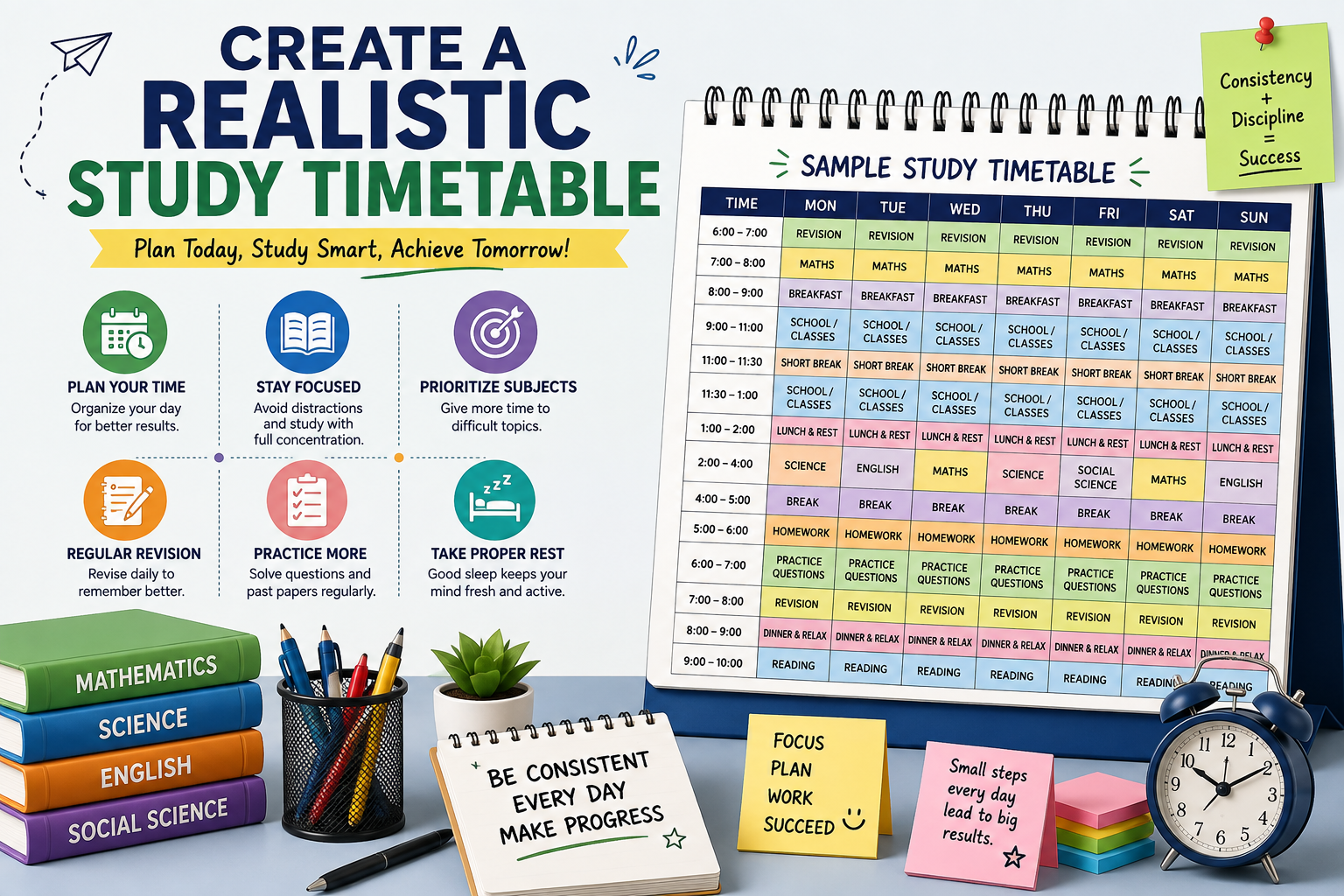
A good study timetable helps you manage your time and study in an organised way. You do not need to study for many hours continuously. The important thing is to study regularly and follow a simple routine.
A realistic timetable should include time for studying, homework, revision, practice, breaks, and proper sleep. Make a timetable according to your daily routine and give extra time to subjects that you find difficult. A simple plan that you can follow every day is better than a perfect plan that you cannot follow.
Points in Detail
1. List All Your Subjects
Write down all the subjects you need to study. This will help you understand what you need to complete and plan your study time properly.
2. Give More Time to Difficult Subjects
Some subjects or chapters may be more difficult for you. Give extra time to understand and practise those topics. Do not avoid difficult subjects.
3. Study for Short, Focused Sessions
You do not need to study for many hours without a break. Study with full concentration for a fixed time, then take a short break. This can help you stay fresh and focused.
4. Include Time for Homework
Complete your school homework on time. Try not to keep all your homework for the last moment.
5. Keep Time for Daily Revision
Spend some time revising what you studied earlier. Regular revision helps you remember important concepts for a longer time.
6. Practise Questions Regularly
Reading is important, but practising questions is also necessary. Solve exercises, worksheets, and important questions to check your understanding.
7. Take Short Breaks
Short breaks can help your mind relax. You can walk, drink water, or take a few minutes of rest before starting your next study session.
8. Get Enough Sleep and Rest
Do not study late every night and ignore sleep. Proper sleep helps you stay active, focused, and ready to learn.
9. Follow Your Timetable Regularly
Your timetable does not need to be perfect. Try to follow it regularly. Even a small amount of daily study can give better results than studying everything at the last minute.
10. Keep Your Timetable Flexible
Sometimes your routine may change because of school activities, homework, or other work. Do not worry if you miss your timetable occasionally. Adjust your plan and continue studying.
Quick Tip for Students 💡
Study regularly, revise daily, practise questions, and take proper rest. A simple timetable that you follow every day can make exam preparation easier and less stressful.